The rules of the White City
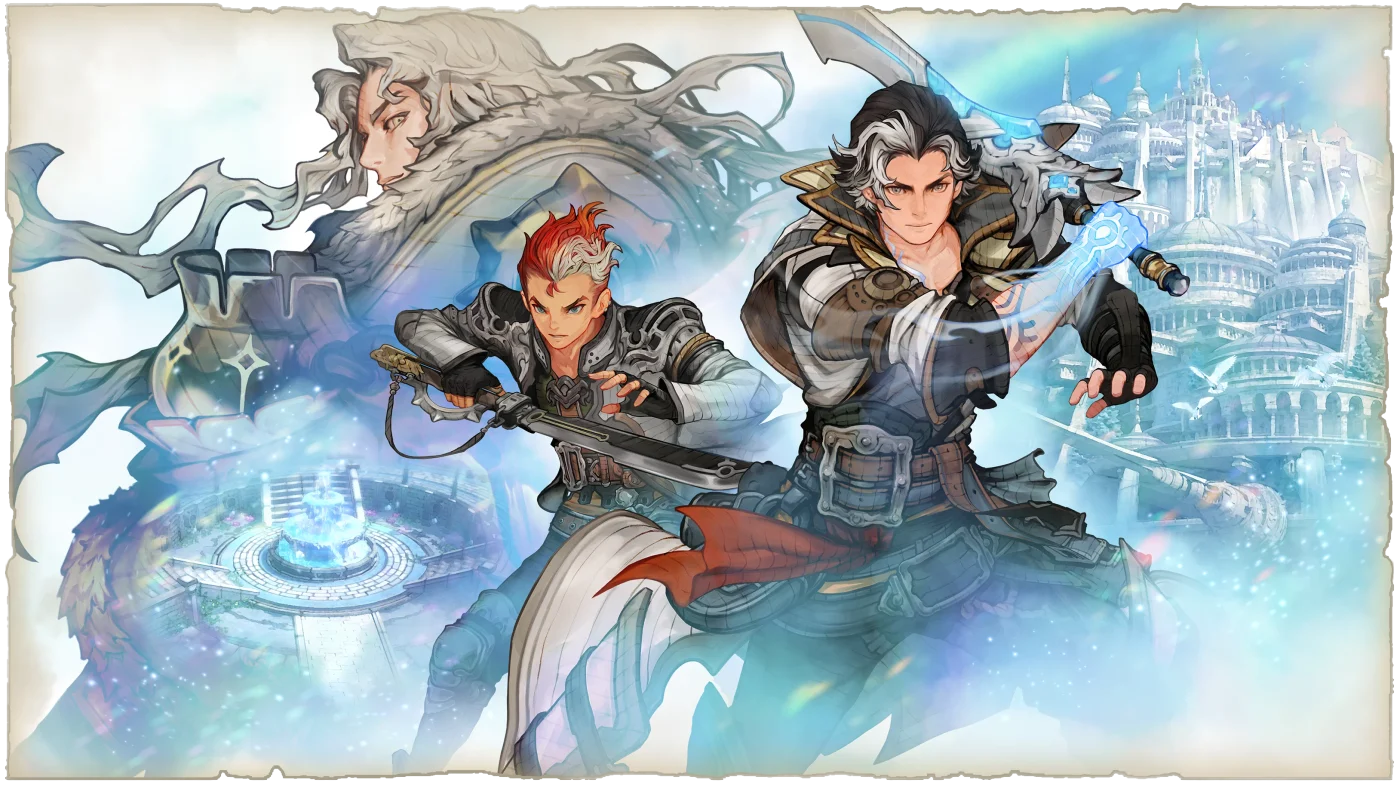
Urvis Ael is described as a white city floating in the sky, separated from the outside world. Its ruler treats an unchanging life as the ideal. Words or actions that lead toward progress and development are punished as serious crimes.
The English announcement makes the central conflict especially direct: wishing for a better future is a capital offense. Wade’s doubts therefore challenge more than a political opinion. They put him outside the order that the city’s security force exists to protect.
Wade, Vallis and the Almighty
Wade begins as an accomplished member of the security organization. Vallis is his partner and a captain in the southern district. The official biography describes Vallis as supportive of Wade but intensely loyal to the Almighty, creating tension between a personal bond and the city’s authority.
The Almighty has lived for a thousand years and knows the lost continents and their histories. His age is a character fact; the sources do not give a complete dated account of when every law, catastrophe or city structure originated.
The departure that starts the journey
Wade’s Psychometry lets him read memories within objects. The knowledge he gains leads him to question the ruler’s supposed paradise. Pursued as a heretic, he casts himself into the Forbidden Sea in search of the world outside.
Urvis Ael is also part of Neria’s past. Her biography says she escaped the city before becoming a leader in Port Azurea’s exploration team. Read the two profiles together to see different points along the same struggle for freedom.
Characters connected to Urvis Ael
| Character | Role | Read more |
|---|---|---|
| Wade | The rebel without a past | Character profile → |
| Vallis | The loyal captain | Character profile → |
| The Almighty | The thousand-year ruler | Character profile → |
Follow the story timeline for the wider historical structure, or open Generations to see how the introduced family relationships cross eras.
Sources & further reading
- Marvelous USA: Eternal Anima announcement and editions
- Marvelous: World & Characters (Japanese)
- Eternal Anima on Steam
Last updated September 10, 2026 · Editorial approach · Suggest a correction